
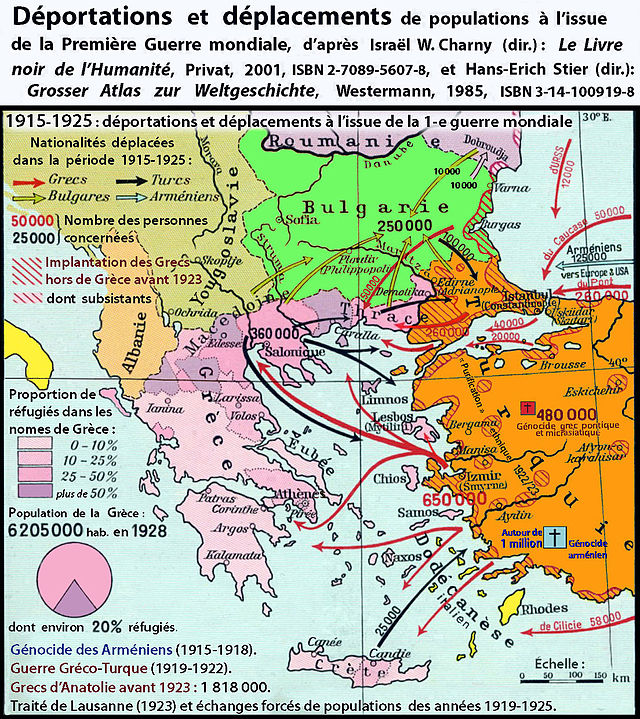
 Greece, a tiny nation with a population of only five million, and which had been engaged in warfare for an entire decade, was forced to accept 1,400,000 Christian refugees, in exchange for expelling 390,000 Muslims to the new Turkish nation. Some of the refugees had left earlier, knowing what was coming.
The Greeks from Asia Minor, who had left with only what they could carry with them, and arrived hungry and destitute, were often seen as aliens by those forced to receive them in their communities, their accents and ways quite foreign even when they spoke Greek, and there were those who spoke only Turkish as well. Enormous shanty towns sprang up around Athens, Piraeus and other cities, and large agricultural estates in Thessaly, Evvia, Crete and Lesvos (Mytilini) were divided up and redistributed to refugee farmers as well as to Greek tenants.
Though the hardships, including disease and extreme poverty of the refugees in Greece is difficult to overstate, there were also the positive effects of stimulation of the country’s industry (almost non existent at the time), and the enormous cultural contribution of the music brought by the newcomers, with sophisticated musicians and singers who had been leading figures in the urban musical tradition in Smyrni (known as Smyrneika).

Why not enjoy Harry's Free Musical Compositions while you read this site? (opens seperately)
©Harry's Greece Travel Guides