
 Along the coast, in towns, it will be flatter. But once you exit most towns be prepared to drive defensively and to negotiate turns. Kindly slow down when entering towns. People live here, children play and sheep and goatherds are pretty common too. Consider yourself lucky should one pass near by. There are police patrols and funny signs warning of radar survelance in some areas too. Greek like to speed and have the worst fatality rate in Europe after Portugal. Away from the shore, if you encounter a herd of sheep or goats that indicates a high likelyhood of fresh food at the local tavernas too! Similarly small ports with fishing fleets are a good sign if you like seafood. Just pull over and make firends!
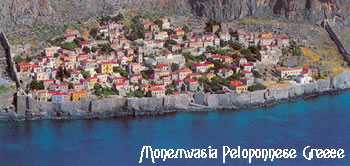
The Peloponnese has some good destinations if its a beach your looking to lay on too. Tolo is well known and you wont need a car. For historic ambience, a night or two in Medieval Naufplion or Monemvassia cant be beat. There are salt marshes for those that like bird watching and many beaches along the west coast with few visitors.
Highlites of the Peloponnese |
Getting There and Away |

Why not enjoy Harry's Free Musical Compositions while you read this site? (opens seperately)
©Harry's Greece Travel Guides