
 Kimolos
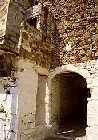
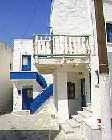
Town or Hora was designed to confuse pirates and is a small labyrinth of white
buildings strewn with strategically placed flower pots which contrast
nicely with the stark whitewash of the buildings. On the way up to town you'll pass the Afendakis Foundation World
Headquarters with the island's museum in the basement. You'll see Mr.
Afendakis statue outside. Within is an amalgamation of various ancient
knickknacks and ostraka (pot-shards) the Kimolotes have dug up
over the years.
Kimolos
Town or Hora was designed to confuse pirates and is a small labyrinth of white
buildings strewn with strategically placed flower pots which contrast
nicely with the stark whitewash of the buildings. On the way up to town you'll pass the Afendakis Foundation World
Headquarters with the island's museum in the basement. You'll see Mr.
Afendakis statue outside. Within is an amalgamation of various ancient
knickknacks and ostraka (pot-shards) the Kimolotes have dug up
over the years.
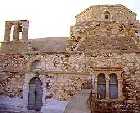
Hora is divided into two parts: Inner Hora-Kastro or old town and Outer Hora-Kastro or new town. The houses of the inner Kastro form the inside of the fortress with loophole windows and four gates. New Town has a smattering of cafes and tavernas and its beautiful domed Greek Orthodox Cathedral Panagia Evangelistria, built in 1614. Other Churches include Taxiarchis (1670), Panagia Odygitira (1873) and Chrisotomas (1680). There are six windmills, one of which actually produces stone ground wheat even today.
The village sprang up around its Venetian Castle built by Marco Sanudo and occupying Kimolos' high point at 355m. Kimolos oldest Church of Christos (1592) sits within the Kastro. The views are good!

 Walk south east
down
the village road towards Milos just opposite and you'll eventually be
where the isthmus connecting the two islands used to be. On the way you'll
pass through Aliki with a beach and a taverna and further along will
come to Aghios Andrea and the ruins of the ancient city that once occupied
the isthmus and has now sunk into the sea. All that remains is the ancient
cemetery or Elliniko Necropolis which has graves from the Mycenaean
period on into the the early part of the 1st millennium.
Walk south east
down
the village road towards Milos just opposite and you'll eventually be
where the isthmus connecting the two islands used to be. On the way you'll
pass through Aliki with a beach and a taverna and further along will
come to Aghios Andrea and the ruins of the ancient city that once occupied
the isthmus and has now sunk into the sea. All that remains is the ancient
cemetery or Elliniko Necropolis which has graves from the Mycenaean
period on into the the early part of the 1st millennium.
Two beaches are close by: Elliniko and Kambana. Kambana is a favorite of the turtles for nesting so don't stick your umbrella too deep into the sand.

Why not enjoy Harry's Free Musical Compositions while you read this site? (opens seperately)
©Harry's Greece Travel Guides